Homo Habilis


BENVENUTI NEL PALEOLITICO INFERIORE!
Ipotesi evolutiva: l'Australopiteco diventa l'Homo Habilis
Uno tra i numerosi gruppi di Austrolopitechi cominciò a utilizzare le mani per lavorare la pietra. Circa 2,8 milioni di anni fa nelle savane dell’Africa comparvero così gli habilis, i primi a cui venne dato il nome di Homo. INIZIA IL GENERE HOMO!
❤️Aspetto fisico ❤️
L’Homo habilis era robusto, sembrava un grosso gorilla. Era molto simile all’Australopiteco, ma era più evoluto e intelligente. Camminava stabilmente su due gambe e utilizzava le mani per afferrare bastoni, sassi, frutti. Era più audace dei suoi antenati e cominciava ad affrontare situazioni pericolose, invece di fuggire.
❤️Come si nutriva❤️
Per cercare il cibo si spostava continuamente nella savana. Era dunque nomade. Le donne e gli individui più piccoli raccoglievano bacche, radici e frutti spontanei. Gli adulti andavano in cerca di uova, di insetti e di resti di animali abbandonati dagli animali predatori. L’Homo habilis era onnivoro.
❤️Come si riparava❤️
L’habilis sceglieva i suoi rifugi in luoghi dove c’era l’acqua e dove era possibile trovare delle prede abbandonate dagli animali. Durante la notte si rifugiava sugli alberi per sfuggire ai predatori. Costruiva una specie di grande nido e usava le fronde per ripararsi dal freddo. Durante il giorno, però, scendeva a terra.
❤️La vita in gruppo❤️
L’Homo habilis viveva in piccoli gruppi composti da poche famiglie. Comunicava con i gesti ed emetteva suoni articolati. Era un vocìo, che non era però ancora un vero linguaggio.
❤️Che cosa sapeva fare❤️
Il nome ”habilis“, significa abile, capace di fare. L’Homo habilis era in grado di lavorare la pietra per costruire strumenti che gli erano utili per la caccia e la difesa. Per cercare radici aveva imparato a scavare il terreno con i bastoni.
La capacità di costruire semplici attrezzi indica che l’habilis era in grado di:
• scegliere, tra i materiali disponibili, quello più adatto;
• capire come costruire uno strumento;
• immaginare come utilizzare gli strumenti che costruiva.
❤️La tecnologia❤️
Per cacciare piccole prede e difendersi dall’assalto degli animali l’Homo habilis lanciava pietre. Per spolpare le prede abbandonate da altri animali aveva imparato a spaccare una particolare pietra, la selce, per renderla tagliente. A questi rudimentali attrezzi è stato dato il nome di chopper.


HOMO HABILIS E CHOPPER
L'Homo habilis è chiamato così ("uomo abile") perché è stato il primo ominide, circa 2,4-1,4 milioni di anni fa, ad avere la capacità cognitiva e manuale di costruire e utilizzare strumenti di pietra (chopper) per tagliare carne e rompere ossa. Questa innovazione tecnologica segnò l'inizio della preistoria e del genere Homo
Archeologia sperimentale (Alberto Angela - realizzazione di un chopper).
https://youtu.be/oEzRjfgE0iY?is=bXhR-qzX9oGxImmn
🥶🥶🥶🥶🥶🥶MA QUI CI SONO SOLO SASSI!!!!
Inesattezze storiche dai libri di testo, smascherate da un museo!
https://youtube.com/shorts/L5eplRq8aBM?is=YjGx9wNBRElDD
IQ0
ARCHEOLOGIA SPERIMENTALE
Questa affascinante disciplina replica e testa oggetti, strumenti e situazioni del passato seguendo un rigoroso protocollo sperimentale che prevede, tra l'altro, l'utilizzo di materie, tecniche e processi produttivi il più possibile simili a quelli dell'epoca a cui appartengono.
Diciamo che probabilmente l'Australopiteco aveva iniziato con forme rudimentali di chopper, che usava principalmente per scavare radici o scuoiare la carne. Ma non si era posto ancora in forma maggiormente attiva, come com la costruzione di utensili come lance ad esempio.
Il chopper ha un lato lavorato. Lo usa inizialmente l'Australopiteco e viene continuato dall'Habilis.
Se ne ha due si chiama Amigdala, con la classica forma a mandorla. È piú raffinata e molto lavorata. Nel video l'artigiano della Pietra realizza un chopper che diventa amigdala. Verrá usata dall'Homo Erectus.
L
Vediamo più da vicino! Dem un'ugiá!🤐🤣
Homo Habilis, un grande opportunista.
Bastoni
https://youtube.com/shorts/IT-wFQT463U?is=B2NP0Vxb8nqbs8NY
Homo Habilis
https://youtube.com/shorts/VB7jM2HzIbc?is=ofYoVNcDrZh1uUdV
Leopardigno
https://youtube.com/shorts/9_GFg4haDXE?is=_BiQUy7zwIQC4OM4
Habilis e il coccodrillo come fa 3 parte
https://youtu.be/AYtVn_bH5t8?is=E1noPr16DeasqxLm
Trasporto carne.
https://youtube.com/shorts/6EvPA3yJ7-I?is=91coI1GsOCIQrbWh
Si ma la puoi tagliare!!!
https://youtu.be/kGIiNkQS6Yk?is=Oooa-RrzlhF2jDcs
Notate che l'Homo Habilis era un grande opportunista! Lui non era ancora un cacciatore vero e proprio. Ma aveva imparato che dentro le ossa si trovava il midollo (proteine) e usava il chopper per spaccare le ossa e succhiarne il contenuto. Per questo preferiva di gran lunga carcasse e resti di prede di grandi predatori, perché era meno faticoso che cacciare. I primi corpo a corpo con le belve avverranno nel tempo, solo con i Neanderthal, quando l'uomo avrà creato strumenti che gli permettono di gareggiare in parità.
Compito facoltativo: come l'habilis. Archeologia sperimentale.
Se hai piacere, sotto la supervisione di un adulto, divertiti a creare delle lance rudimentali come l'homo habilis, usando dei ramoscelli lavorati con pietre. Puoi anche provare a creare un chopper, ma ti renderai conto che le pietre sono molto dure e gli habilis usavano la selce perché friabile e comoda da lavorare. Puoi fare una foto o due e mandarmi a Registro come è andata, se ti sei divertito e cosa hai imparato!

https://youtu.be/DfilDGIIuKE?is=3vakp6EYkNKbv3Qb
Rilassiamoci
https://www.instagram.com/reel/DVt9Q1DjdPa/?igsh=OXMyZXZlbXNheG5j
Vocalizzi. Grida e urla. Solo gli Habilis?
Lucy


Materiale informativo - video
I miei appunti: leggo e scrivo.
https://youtube.com/shorts/sySi09uE4cw?si=JveBHs061r1M6OkW
Presentazione
https://www.instagram.com/reel/DVRBUGjiNu2/?igsh=ZHYwOGwxNWE4Y2xh.
Barca
https://youtube.com/shorts/o94LMTl9WWc?si=Xa3kxFF2pPDprBVE
insetti
https://youtube.com/shorts/9jLH2nUB1G4?si=6dFU2M9P-AuN9ErN
piccolo video canzone AI
https://youtube.com/shorts/DW1ULmmUnH8?si=nRNhbLshpCrfR4dH Lucy https://youtu.be/c2c9fJpKIVY?feature=shared
Storia L-australopiteco - Risorse didattiche https://share.google/aTHPYkyy9NAENHBrS
Giochiamo on line!!!
Mentre colori i disegni di Lucy, ascolta la canzone che ha ispirato il suo nome! Che ne pensi?
https://youtu.be/eC-A0xwYwAU?si=qZURsz-xV15N4-Pc

IL VELOCIRAPTOR.
QUESTA IMMAGINE È VERA O FALSA?
PARLIAMONE INSIEME

Notiamo che le dimensioni sono più ridotte

Non sembra si potesse comunque scherzarci.
Cosa ne dite?

Ma chi ha creato questo pasticcio?

Ecco il vero aspetto


The Venice Carnival (A1 – Present Simple)
The Venice Carnival is a famous festival in Italy.
People first record it in the year 1268.
Today, the carnival takes place every year in Venice.
The modern Venice Carnival starts in winter.
It usually begins a few weeks before Ash Wednesday.
It ends on the Tuesday before Ash Wednesday.
The word carnival comes from Italian.
It comes from the words carne (meat) and vale (farewell).
The word means “farewell to meat”.
People stop eating meat before Easter.
The tradition of the Venice Carnival begins after 1162.
In that year, Venice wins a battle.
People celebrate the victory in Piazza San Marco.
They celebrate with animals, food, and public events.
Later, people start using masks.
In the eighteenth century, the Venice Carnival is very popular.
Venice loses political power but gains pleasure and fun.
Rich people travel across Europe and visit Venice.
They enjoy parties, art, and theatre.
Painters and writers talk about carnival life.
The spirit of the carnival is joy and freedom.
Later, the importance of the carnival becomes smaller.
In the 1930s, the government stops the carnival.
In 1979, people in Venice start the carnival again.
They love their tradition and culture.
Today, the image of the masked person is famous all over the world.
The Venice Carnival makes the city magical in winter.
Carnival of Venice
https://youtube.com/shorts/oQkcw2pBrNI?si=DI4dO8BwU8l1ICIk
https://youtube.com/shorts/5BKPH4vpjtQ?si=WGAlGn81EumbXNQr

Scrivi sul quaderno e traduci nella colonna a fianco. Rivivi l'esperienza di una viaggiatrice americana a Venezia. Se vuoi, cerca sul computer che cosa ha visitato.
Venice Carnival – A1
Stop 1 – St Mark’s Square
We go to St Mark’s Square.
We see many people in carnival costumes.
The costumes are colorful and beautiful.
We walk around the square.
We take photos and enjoy the carnival atmosphere.
Stop 2 – Eat Frittelle
We eat frittelle di carnevale.
Frittelle are sweet and round.
They are made of fried dough.
They have sugar and raisins or cream.
Frittelle are a symbol of the Venice Carnival.
We eat them only during carnival time.
Stop 3 – Walk in Venice
In the evening, we walk in the streets of Venice.
We see small bridges and canals.
Venice is beautiful and magical.
We stop for dinner with our family.
Stop 4 – Gondola Ride
We wake up early in the morning.
We go on a gondola ride.
The gondola goes on the canals.
We see old houses and water streets.
The ride is short but very special.
We take nice photos.
Stop 5 – Carnival Costumes
We wear carnival costumes.
The costumes are big and elegant.
We feel like princes and princesses.
Many people take photos of us.
We have fun and smile a lot.
Stop 6 – Hot Chocolate Break
We stop for hot chocolate and sweets.
We eat more frittelle.
The place is beautiful and elegant.
We relax and enjoy the moment.
Stop 7 – Evening Snack
In the evening, we go to a café.
We eat a small snack.
The café is old and famous.
We imagine life in the past.
Stop 8 – Watch a Show
We watch a small show or concert.
We listen to music.
The performers are very good.
https://youtu.be/FSOkEr7pB6k?si=VAvZcwucxvV05pee
Danziamo il minuetto
Preistoria video.
Canta e impara!!!!
https://www.instagram.com/reel/DTAt-n8iN9v/?igsh=emZpMXgzeGZ5YWw0


Approfondiamo le conseguenze che i rapporti tra le potenze e le scelte politiche possono portare nel mondo

Curiosoni, mi avete chiesto informazioni sulle due guerre.
Ho cercato di esaudire queste richieste.
Affronterete questo argomento alle medie, ma a noi serve per capire in che modo le scelte delle potenze Europee, che stiamo studiando, possono influenzare la vita delle persone.
E perché, spesso,ci sono interessi economici (i soldini piacciono così come il potere) che hanno creato nel corso della storia dei veri e propri disastri.
Ora sta a voi, nuove generazioni, non rifare gli stessi errori.
Sapete. Vi svelo un segreto.
Il tempo passa, veloce, è una ruota. Quello che considerate vecchio non lo è così tanto. Nella storia del pianeta è un battito di ciglia.
Questa gente aveva un nome.
Famiglia.
Amici.
Un cane.
Non sono facce lontane di un mondo lontano, sono i vostri trisavoli, tre generazioni fa. E voi siete i loro discendenti.
Onorate le persone che sono morte, che hanno portato quel benessere che voi indossate, mangiate, condividete.
Perché senza il coraggio di quella signora che ha ospitato i partigiani rischiando la vita se la beccavano, di quel papà che ha combattuto nella neve perdendo la salute o la serenità mentale, di chi ha perso un fratello, un amico. Un figlio. Noi. E voi. Non saremmo chi siamo ora.
E c'è ancora da combattere. Oggi. Per la pace. Ma con le parole. Per la natura. Per i diritti. Per il diritto di essere pienamente noi stessi.
Buona lettura cucciolotti!
Poi ne parliamo insieme
Teacher Barby
La Prima Guerra Mondiale https://teachy.ai/material/56604e3c-4f31-43f5-949d-1ca353f3d809?title=la-prima-guerra-mondiale&referral_code=PK6JG2C&referral_source=material
La Seconda Guerra Mondiale https://teachy.ai/material/4f781c4e-dd2b-4991-b0bd-d3294e4adb17?title=la-seconda-guerra-mondiale&referral_code=PK6JG2C&referral_source=material
Jane Goodall - classe quinta
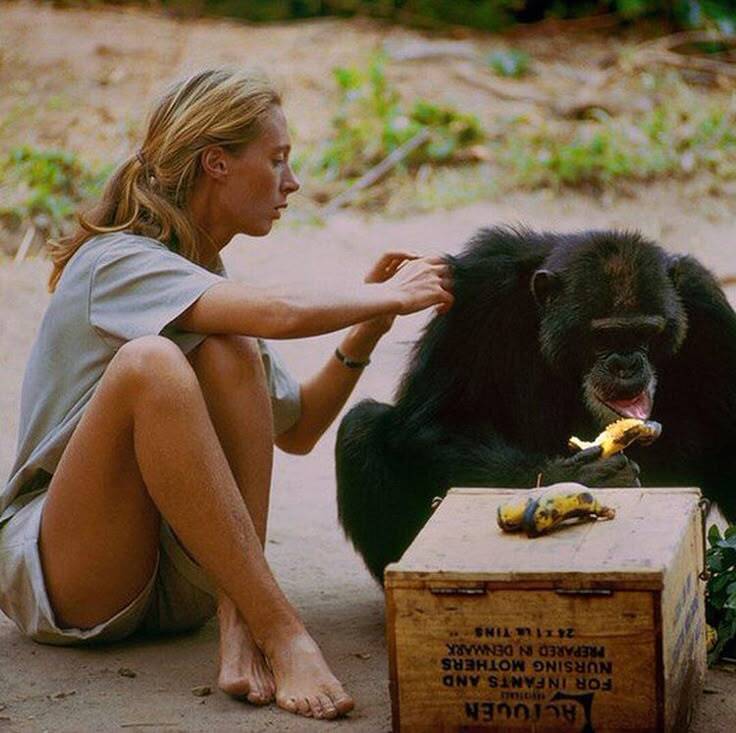
🌿 Jane Goodall – A Life with the Chimpanzees
Jane Goodall is one of the most famous scientists in the world. She is a primatologist, a person who studies primates like chimpanzees and gorillas.
Jane is born in London, England, in 1934. Since she is a little girl, she loves animals deeply. She spends hours watching birds, worms, and her dog. When she is only four years old, she hides inside a chicken coop for hours because she wants to see how a hen lays an egg! Her mother does not get angry — she encourages Jane’s curiosity.
Jane dreams of going to Africa. She doesn’t have money to study at university, but she works hard and saves. One day, her dream comes true: she travels to Kenya to visit a friend. There she meets the famous anthropologist Dr. Louis Leakey, who believes Jane’s patience and love for animals make her perfect to study wild chimpanzees.
In 1960, Jane arrives in the Gombe forest, in Tanzania. She is only 26 years old. At first, the chimpanzees run away from her — they are afraid. But Jane waits, quietly and kindly, day after day, week after week. Slowly, they start to trust her.
She gives them names instead of numbers. There is David Greybeard, the wise old male, and Flo, the gentle mother. Jane watches them with respect and love. She writes down everything she sees. One day, she sees something incredible: David Greybeard uses a stick to catch termites — he makes a tool! This changes science forever, because before Jane, people thought only humans used tools.
Jane realizes that chimpanzees are not so different from us. They kiss, hug, laugh, fight, and forgive. They have families and emotions. Her discoveries teach the world that humans are part of nature, not above it.
Over the years, Jane writes many books and becomes a voice for animals and the planet. She creates the Jane Goodall Institute, which protects chimpanzees and their forests. She also starts the program Roots & Shoots, to help young people take action for people, animals, and the environment.
Jane travels around the world almost every day of the year. She meets children, teachers, scientists, and world leaders. She talks about hope, peace, and respect for all living beings. Her message is simple: “Every individual matters. Every action counts. Every day makes a difference.”
Jane Goodall is now remembered as a woman of peace, patience, and courage. Her life shows that dreams can come true when we follow them with love and kindness. Even after her death in 2025, her spirit lives on in the forests, in the chimpanzees, and in every child who believes they can make the world better
1. Who is Jane Goodall?
➜ Chi è Jane Goodall?
2. Where is she from?
➜ Da dove viene?
3. What animals does she study?
➜ Quali animali studia?
4. Where does she work with chimpanzees?
➜ Dove lavora con gli scimpanzé?
5. What is the name of her first famous chimpanzee friend?
➜ Come si chiama il suo primo famoso amico scimpanzé?
6. What did she discover about chimpanzees?
➜ Che cosa ha scoperto sugli scimpanzé?
7. What organization did she create?
➜ Quale organizzazione ha fondato?
8. What is “Roots & Shoots”?
➜ Che cos’è “Roots & Shoots”?
9. What message does Jane Goodall teach to the world?
➜ Qual è il messaggio che Jane Goodall insegna al mondo?
10. When did she die?
➜ Quando è morta?
Crea il tuo sito web con Webador